How I Work with the Moon Phases
A brief introduction to the symbolic framework behind my moon phase reflections.
🌑 The Lunar Cycle
🌕 Moon & Sun
🏛️ Tuché & Daimon
♾️ The Eight Moon Phases
🦭 The Symbols of the Moon & Sun
🌑 New Moon: One Degree
🌒 After the New Moon: Two Degrees
🌓 Continue the Journey
🌑 The Lunar Cycle
When I work with the moon, I work with eight moon phases:
🌑 New
🌒 Waxing crescent
🌓 First quarter
🌔 Waxing gibbous
🌕 Full
🌖 Waning gibbous
🌗 Last quarter
🌘 Waning crescent
Each Moon Phase offers its own invitation within the lunar cycle.
Together, they describe a symbolic rhythm of emergence, growth, building, refinement, revelation, sharing, release, and wisdom—a cycle of birth, growth, death, and rebirth that repeats month after month.
It takes about 29½ days for the Moon to complete one cycle around the Earth. During that time, it moves through all twelve zodiac signs, spending about 2½ days in each sign.
🌕 Moon & Sun
When people work with the moon phases, they often focus only on the Moon.
I work with both the Moon and the Sun.
Because it's the relationship between them that creates the lunar phases.
The Moon doesn't produce its own light.
It reflects the light of the Sun.
As the relationship between the Moon, Earth, and Sun changes, so does the proportion of the Moon's illuminated surface we can see from Earth.
The images below demonstrate the relationship between the Moon, Earth, and Sun that creates each lunar phase.
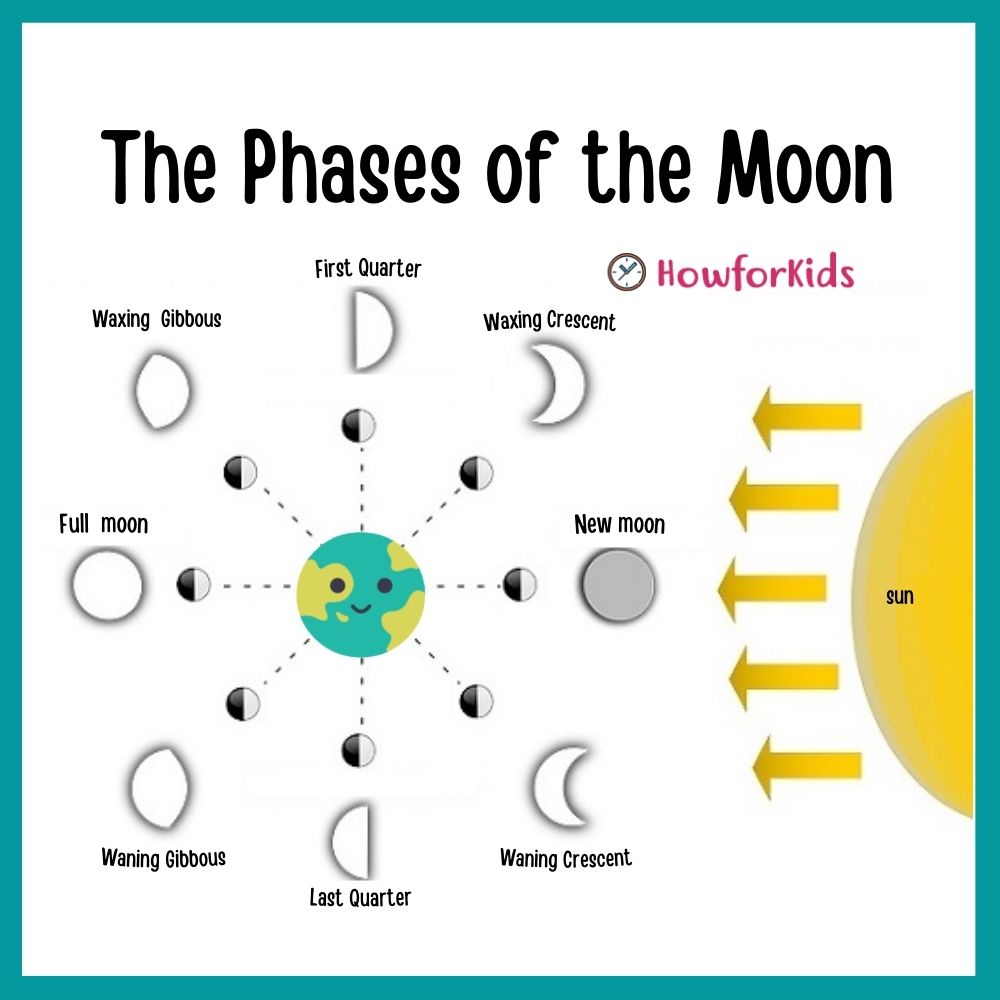
Phases of the Moon
As the Moon orbits the Earth, it reflects the Sun's light differently from our perspective on Earth.
At the New Moon, the Moon is positioned between the Earth and the Sun. The Sun illuminates the side of the Moon facing away from us, so the Moon appears dark.
At the Full Moon, the Moon is on the opposite side of the Earth. The Sun illuminates the side of the Moon facing us, allowing us to see its full face.
The astronomy tells us how the moon phases occur.
Astrology explores what they symbolize.
🏛️ Tuché & Daimon
In Ancient Greece, Tuché and Daimon represented twin forces.
Tuché personified the circumstances and situations that befall us.
Luck and chance.
The unexpected.
The opportunities and challenges life places before us.
The unpredictable flow of fate and fortune.
The things that are largely outside our control.
Daimon personified the higher self or guiding spirit of the individual. It guided each person toward flourishing by offering wisdom, guidance, and suggestions for right action.
In the way I work with the Moon Phases, I view the Moon as symbolic of Tuché—the situations, circumstances, and emotional realities that arise during a lunar cycle.
The Sun symbolizes Daimon—our conscious participation in those circumstances.
Our awareness.
Our response.
Our discernment.
Our capacity to make the best of our circumstances.
And, ultimately, to flourish.
Together, Tuché and Daimon describe the relationship between what life presents and how we participate.
Think of Tuché as the hand of cards you're dealt.
Daimon is the wisdom that helps you decide how to play them.
You don't control the cards.
But you do participate in the game.
I view Moon Phases as a perpetual dance between Moon and Sun —
between Tuché and Daimon.
Between what happens
and how we respond to it.
Between the situations and circumstances we experience
and the awareness they awaken.
Between what life presents
and the possibility of flourishing through it.
♾️ The Eight Moon Phases
The Moon doesn't ask the same thing of us every night.
Like the changing seasons or the life cycle of a plant, each Moon Phase invites a different way of participating with the situations and circumstances we encounter. There is a time to emerge, to grow, to build, to refine, to reveal, to share, to release, and to gather wisdom before beginning again.
Together, they describe a complete rhythm of birth, growth, death, and rebirth that repeats month after month, each cycle inviting us to meet life in a different way.
Here's how I understand each phase of the lunar cycle.
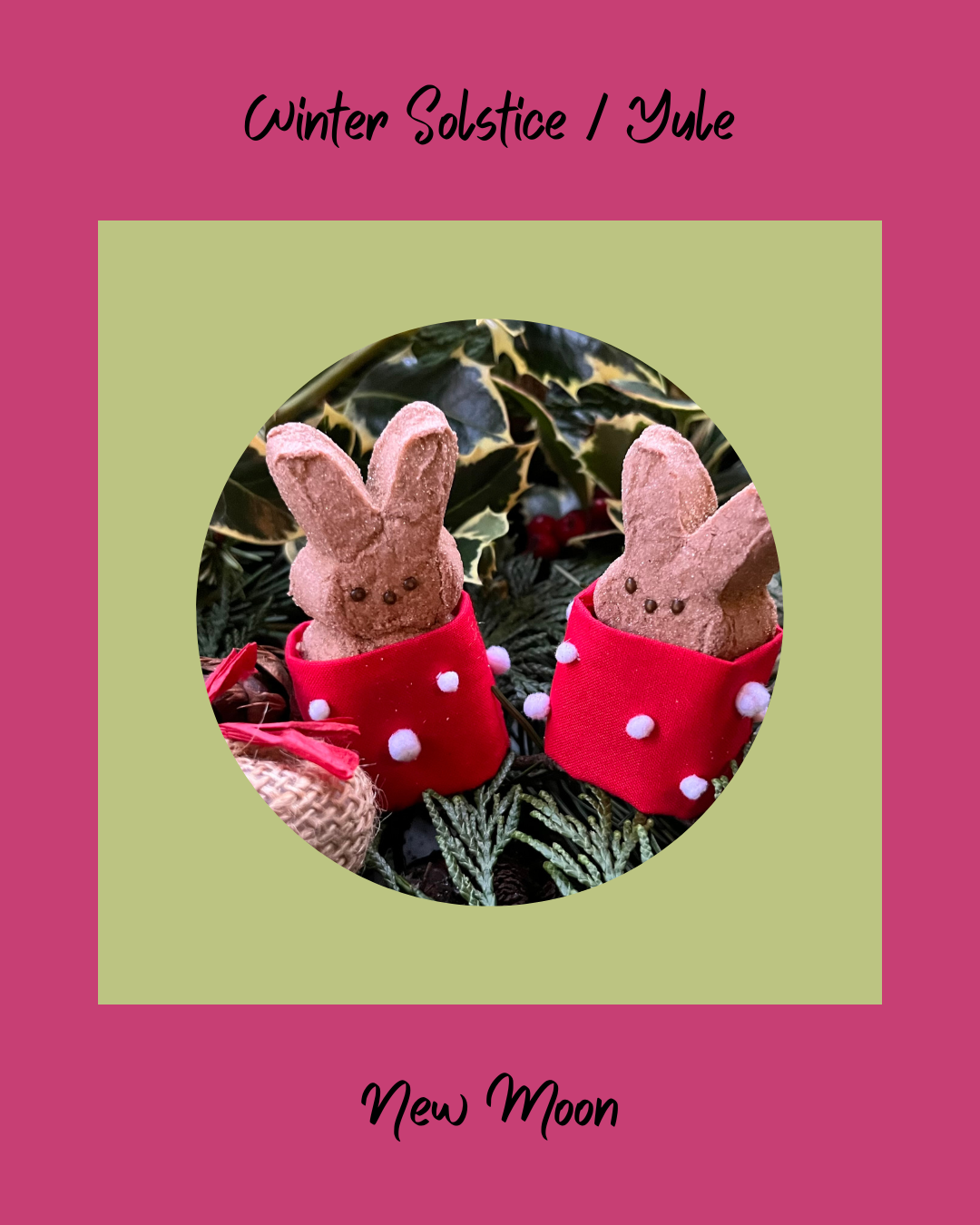
Phase: New
Theme: Emerge
Emotional Flavor: Trust
Wheel of the Year: Winter Solstice / Yule
Plant cycle: seed germinates
Like a seed germinating beneath the soil, something new begins to stir before it can be seen. We may sense a longing, an idea, or a subtle shift in direction without yet knowing where it will lead.
The New Moon isn't a time for certainty.
It's a time for emergence.
The vision is often felt before it is fully understood.
As the cycle unfolds, what begins as an instinctive impulse gradually reveals itself through experience.
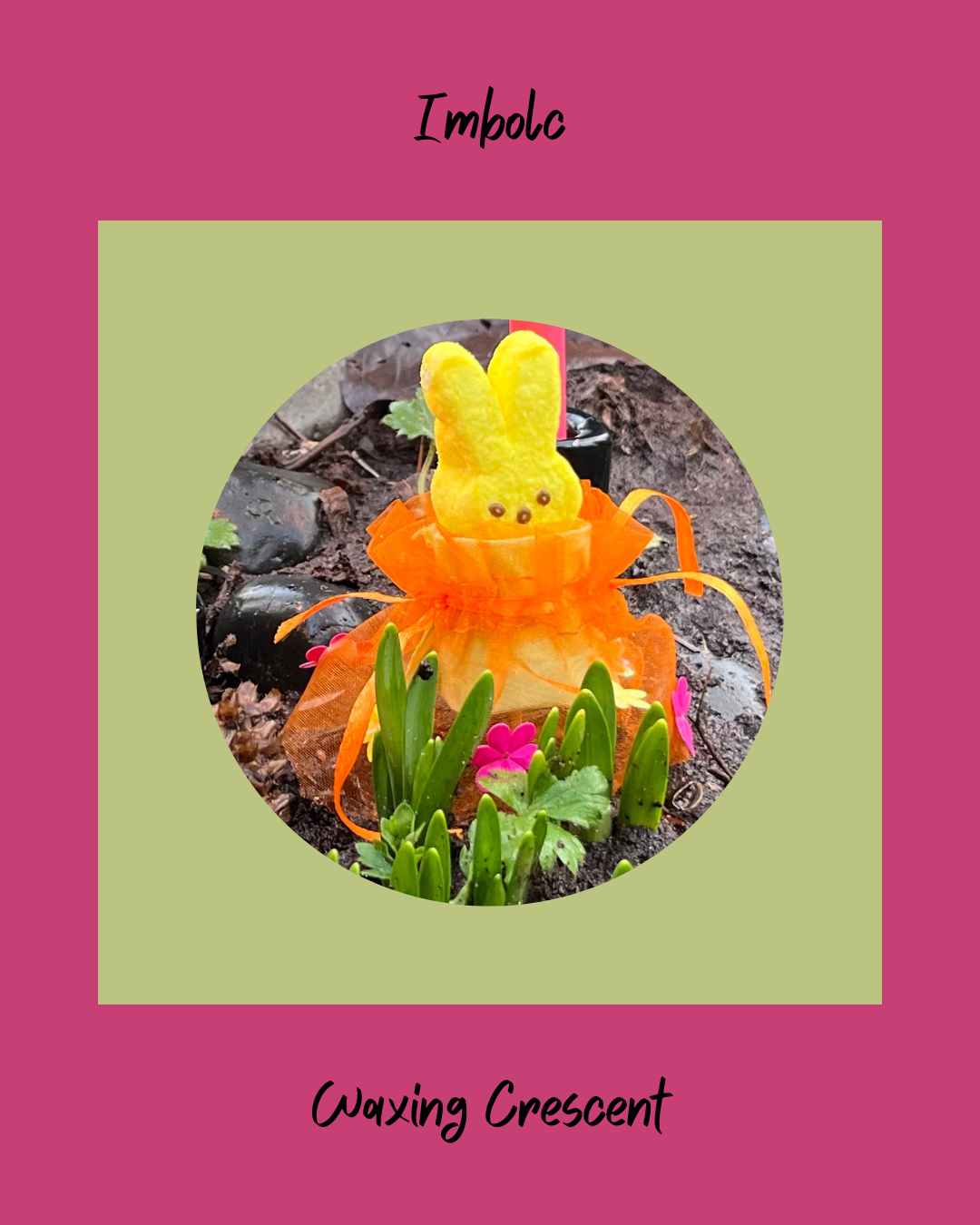
Phase: Waxing Crescent
Theme: Grow
Emotional Flavor: Courage
Wheel of the Year: Imbolc
Plant Cycle: seed pushes shoots above ground
The Waxing Crescent asks us to take our first steps toward what began at the New Moon.
This is often the most vulnerable part of the cycle. The familiar still pulls at us, while the new direction has only just begun to emerge. We may feel the tension between staying where we've been and moving toward what wants to grow.
Like a seed breaking through its casing and sending its first shoots toward the light, the vision begins to take shape.
We begin to loosen the past's hold on us.
We don't see the whole path yet.
But we see enough to keep moving.
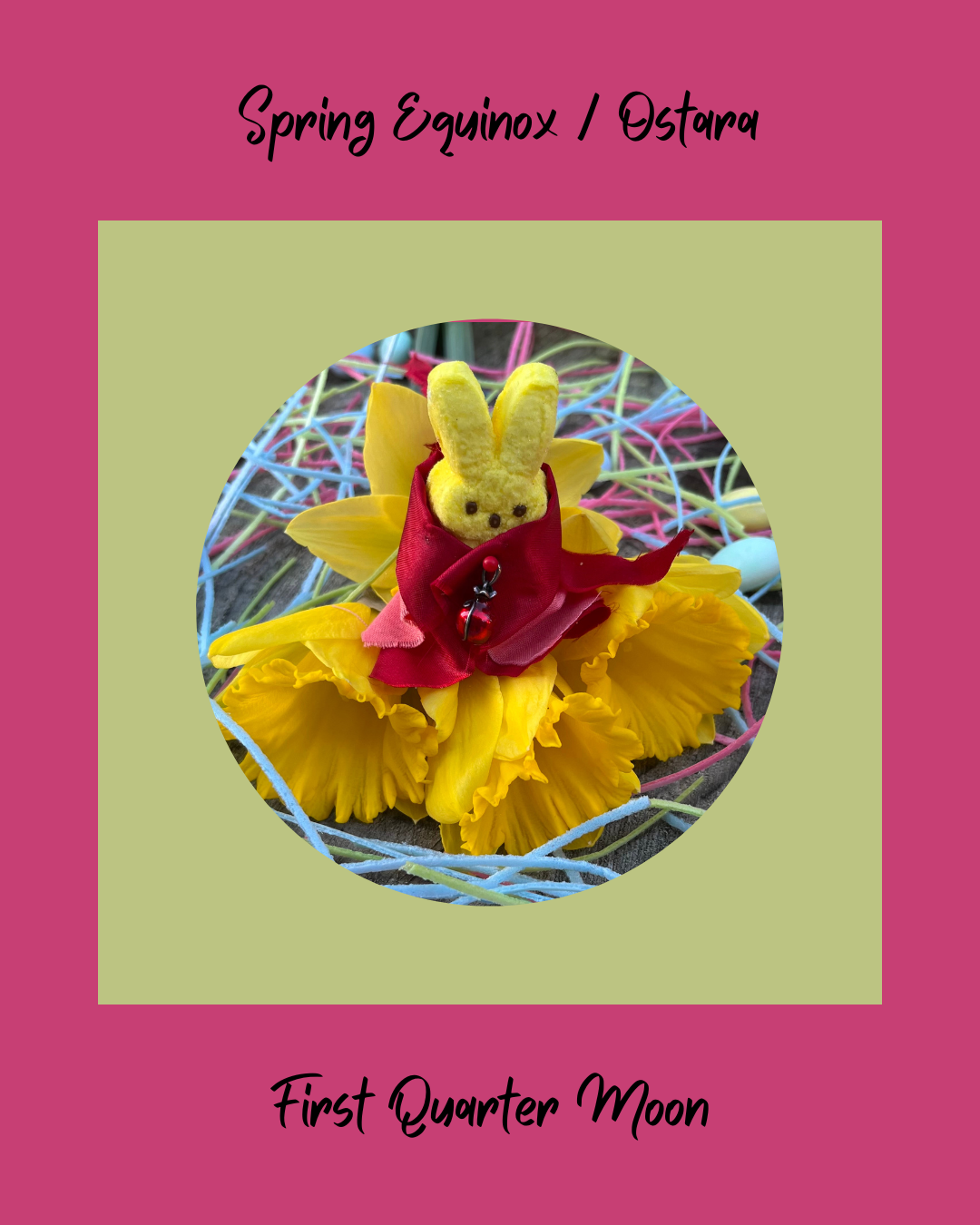
Phase: First Quarter
Theme: Build
Emotional Flavor: Commitment
Wheel of the Year: Spring Equinox / Ostara
Plant Cycle: seed establishes roots and stem
The First Quarter asks us to commit to what began at the New Moon.
The vision is no longer just a feeling or a possibility. It asks something of us. This is the phase of building the structure that will support what we hope to bring into the world.
Like a seed establishing its roots and stem, we begin creating a stable foundation. Our actions give shape to what has until now existed mostly as potential.
We don’t see the final form yet.
But we’re building what will make it possible.
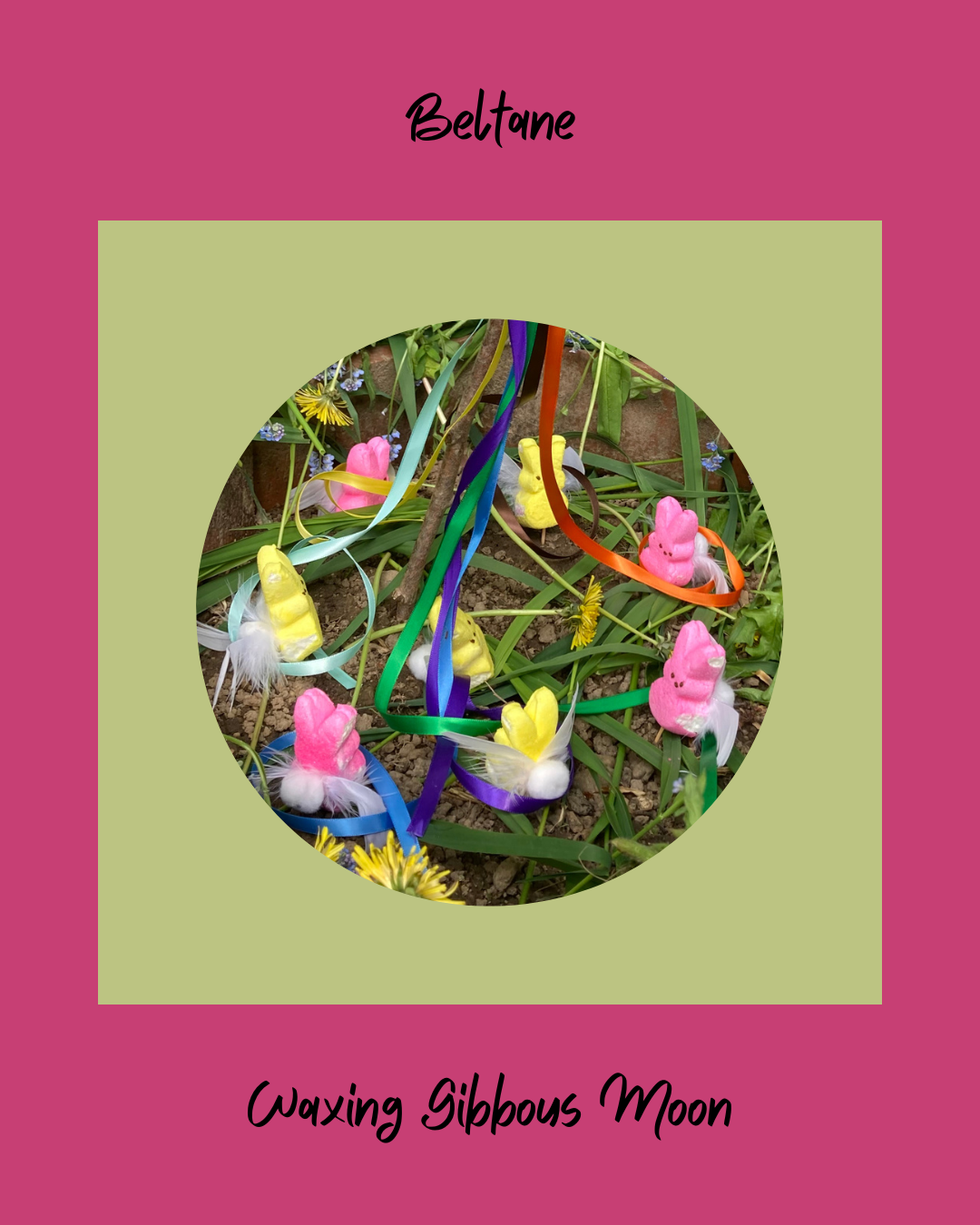
Phase: Waxing Gibbous
Theme: Refine
Emotional Flavor: Discernment
Wheel of the Year: Beltane
Plant Cycle: seed buds
The Waxing Gibbous invites us to refine the structure we've been building.
With the foundation in place, we pause to assess what's working, what isn't, and what could be strengthened. Small adjustments made now help what we're creating become more resilient, intentional, and aligned with its purpose.
Like a plant forming its first buds, the shape of what's growing begins to reveal itself. We can sense what’s ready to bloom, even if it hasn't fully opened.
We're preparing for revelation.
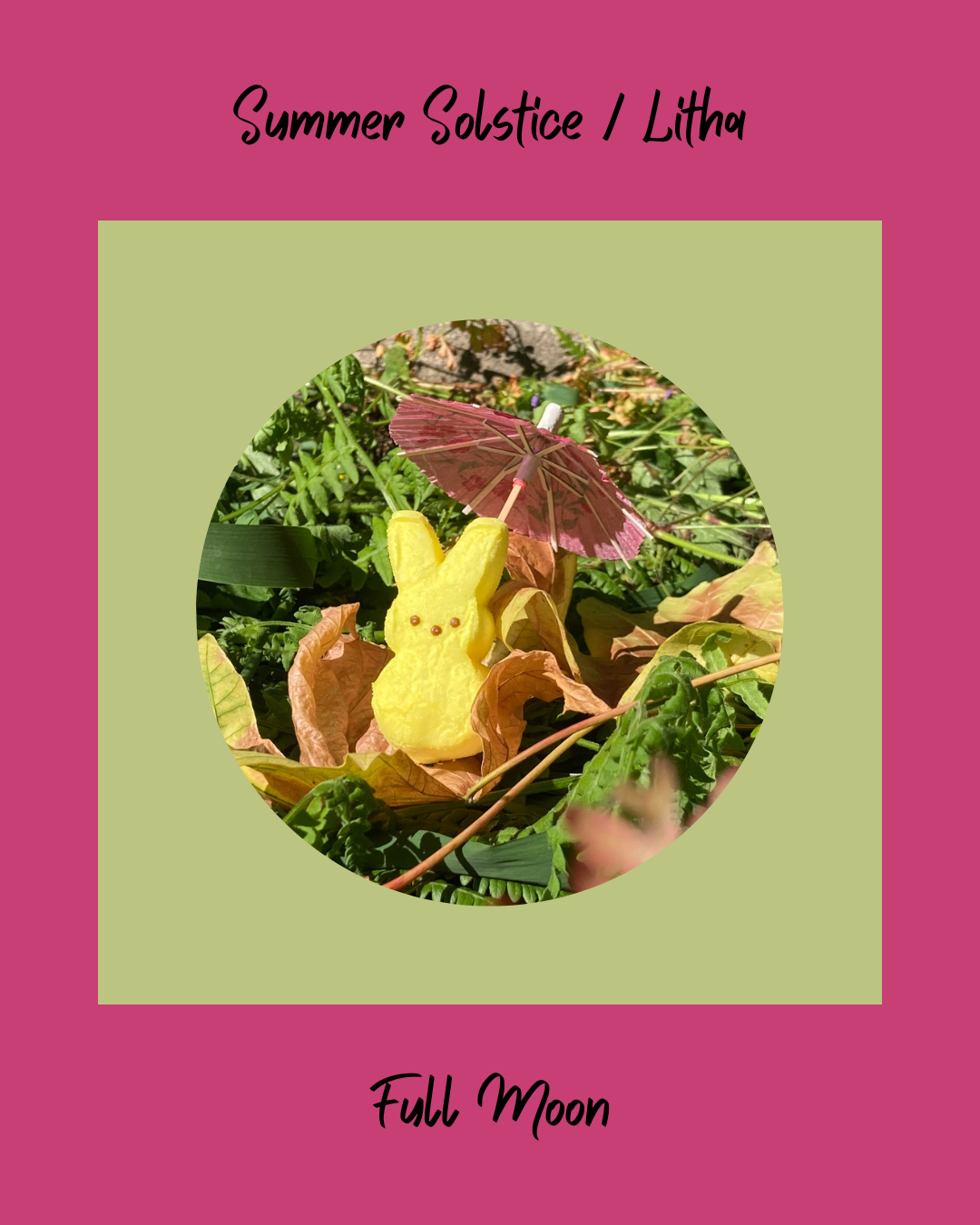
Phase: Full
Theme: Reveal
Emotional Flavor: Curiosity
Wheel of the Year: Summer Solstice / Litha
Plant Cycle: seed flowers
The Full Moon reveals what’s been growing throughout the lunar cycle.
Like a plant bursting into flower, what’s been developing beneath the surface now comes into full view. This is the phase of illumination, when we can more clearly see what has been growing all along.
Revelation doesn't always bring certainty.
Sometimes it confirms we're on the right path.
Sometimes it shows us what needs to change.
Whatever is revealed becomes an invitation to meet what life is showing us with curiosity.
We see what’s come into bloom.
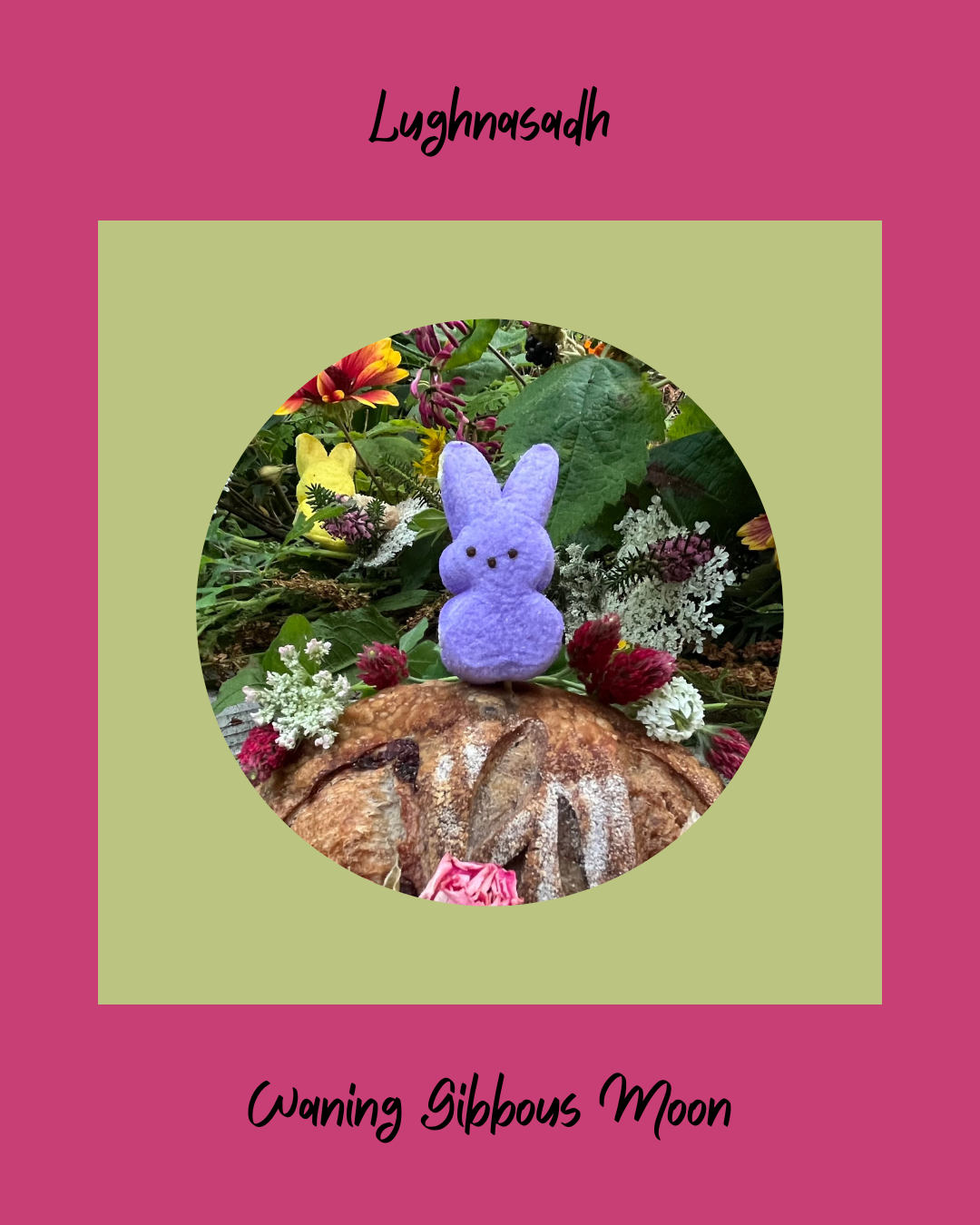
Phase: Waning Gibbous / Disseminating
Theme: Share
Emotional Flavor: Generosity
Wheel of the Year: Lughnasadh
Plant Cycle: seed bears fruit
The Waning Gibbous invites us to share what's come into bloom.
As the light begins to wane, our attention naturally shifts from revelation toward contribution. What we've cultivated throughout the lunar cycle is no longer just for us. This is a time to share what we've learned, offer what we've created, and allow it to become part of someone else's journey.
Like a plant bearing fruit, what we've cultivated becomes nourishment for others and carries the seeds of future beginnings.
We discover that meaning grows through sharing.
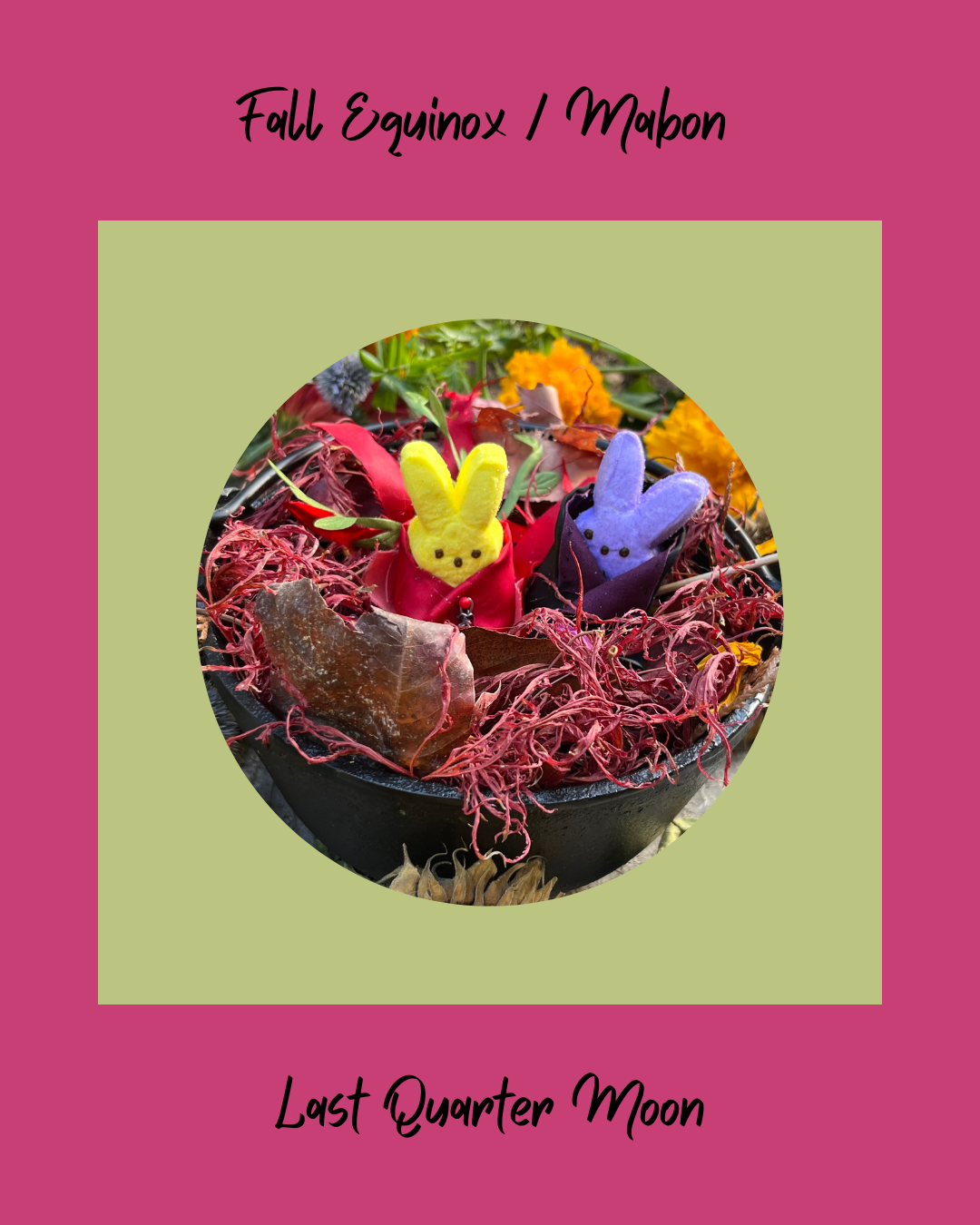
Phase: Last Quarter
Theme: Release
Emotional Flavor: Acceptance
Wheel of the Year: Fall Equinox / Mabon
Plant Cycle: seed withers and decomposes
The Last Quarter invites us to release what’s completed its purpose.
As light and darkness come back into balance, we begin turning our attention toward the next cycle. This is a time to notice what no longer supports who we’re becoming or what we’re growing and to let it return to the soil.
Like a plant withering and decomposing after bearing fruit, what’s fulfilled its purpose can now become compost for future growth. Endings make space for beginnings.
We honor what has been by letting it go.
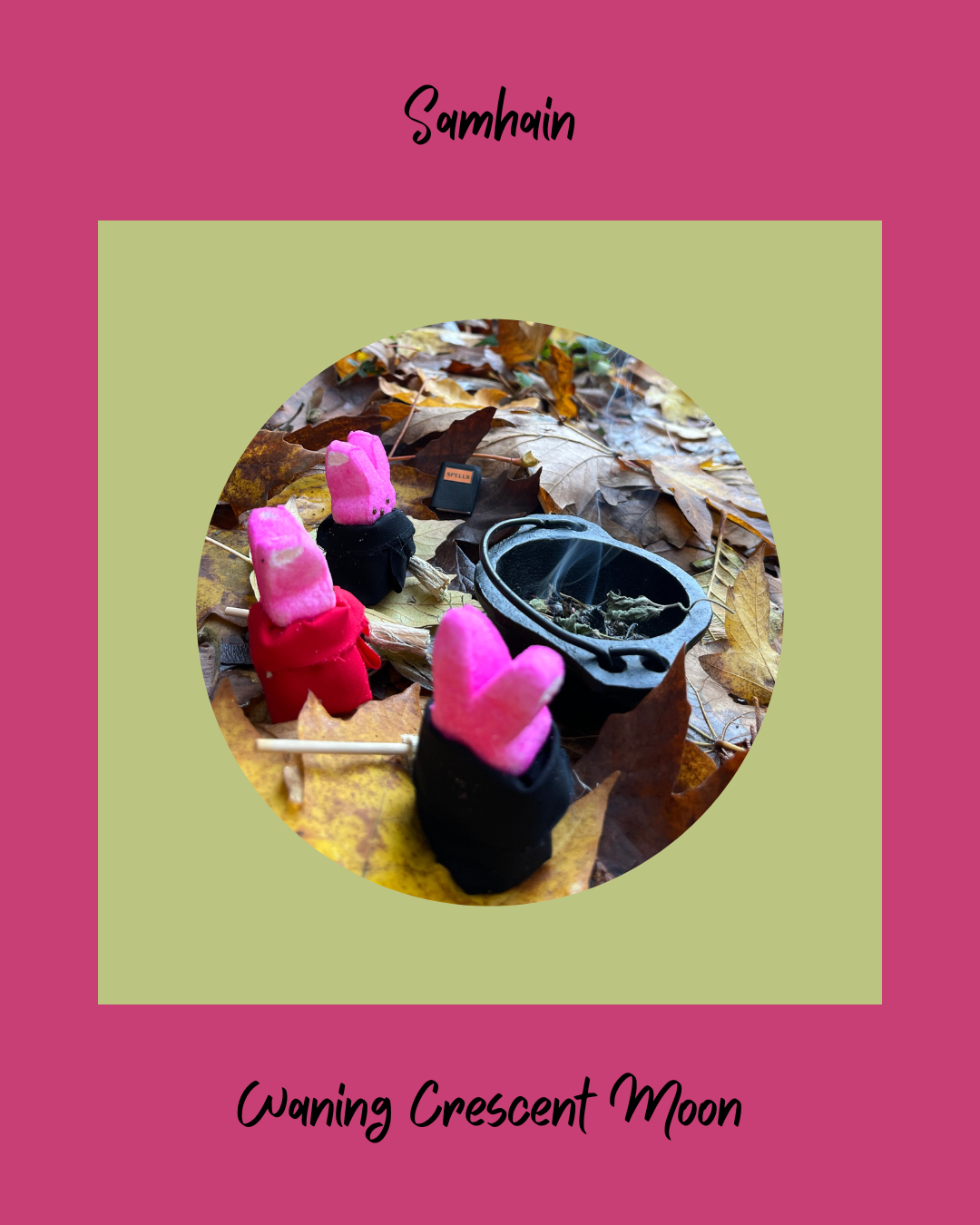
Phase: Waning Crescent / Balsamic
Theme: Gather
Emotional Flavor: Wisdom
Wheel of the Year: Samhain
Plant Cycle: seed turns back into itself
The Waning Crescent invites us to gather the wisdom of the cycle before a new one begins.
As darkness reaches its deepest point, activity gives way to reflection. This is a time to rest, integrate, and notice what the entire cycle has taught us. Rather than rushing toward what's next, we allow our experiences to settle into wisdom.
Like a seed turning back into itself, we gather only what is essential and carry it forward. What remains becomes the foundation from which a new cycle will emerge.
We return to ourselves.
🦭 The Symbols of the Moon & Sun
Moon & Sun
Astronomically, the lunar phases are created by the changing relationship between the Moon and the Sun.
Symbolically, I work with them in much the same way.
The Moon doesn't cause our experiences or emotions. Instead, it reflects the ongoing relationship between what life presents and how we choose to participate.
The Moon represents the situations and circumstances life presents, along with our direct experience of them.
Tuché.
The Sun represents our conscious participation in those experiences—our awareness, our choices, and our capacity to respond with wisdom.
Daimon.
Together, they invite us into an ongoing practice of conscious participation.
Each cycle invites us to respond with a little more awareness than the one before.
New & Full Moons
While every lunar cycle includes eight Moon Phases, my monthly reflections focus on the New Moon and the Full Moon.
The New Moon marks the beginning of a new cycle, even when we can’t yet see it.
The Full Moon illuminates what has come into view since the New Moon, inviting reflection as the cycle turns toward sharing, release, and renewal.
Together, they offer two meaningful points of reflection within the larger cycle of eight Moon Phases.
Writing about all eight Moon Phases every month wouldn't leave me much time to live the cycle itself.
Sabian Symbols
At every Moon Phase, the Moon and Sun occupy specific degrees of the zodiac.
I use those degrees to identify their corresponding Sabian Symbols—360 symbolic images, one for each degree of the zodiac.
There are other resources available to explore the meaning of each degree of the zodiac, such as the I Ching hexagrams, the Vedic Moon Mansions, and the 36 Decans. Right now, I’m focusing on the Sabian Symbols for simplicity’s sake.
Rather than making predictions, I approach these symbols as contemplative images. They offer another way of reflecting on the themes emerging during a particular lunar cycle and often reveal new layers of meaning that unfold over time.
The Sabian Symbols are another lens through which I explore the dance between the Moon and the Sun, Tuché and Daimon, circumstance and conscious participation.
🌑 New Moon: One Degree
The New Moon occurs when the Sun and Moon occupy the same degree of the zodiac.
Because they share the same degree, they also share the same Sabian Symbol.
At the New Moon, Tuché (the situations and circumstances we encounter) and Daimon (our conscious participation in them) are woven together within a single symbolic image.
One symbol.
One seed.
Rather than separating outer experience from our response to it, the New Moon invites us to contemplate them as a unified beginning.
As the cycle unfolds, our intention develops through the ongoing relationship between what life presents and how we choose to participate.
🌒 After the New Moon: Two Degrees
After the New Moon, the Moon and Sun gradually move apart as they continue their journey through the zodiac.
Each occupies a different degree and therefore has its own Sabian Symbol.
The Moon's symbol reflects Tuché—the situations, circumstances, encounters, and invitations arising through life.
The Sun's symbol reflects Daimon—the consciousness, participation, and response we bring to those experiences.
Together, they form a symbolic conversation.
One symbol shows what life is presenting.
The other reveals how we might consciously meet it.
Rather than reading them separately, I read them in relationship with one another.
🌓 Continue the Journey
If you'd like to put this framework into practice, I invite you to explore my Moon Phase reflections.
Each lunar cycle includes a New Moon and Full Moon essay that explores the Sabian Symbols, questions for contemplation, and a simple ritual for working with the symbolism of that phase.
You can begin exploring them on the Moon Phases page.
Love,
Heidi